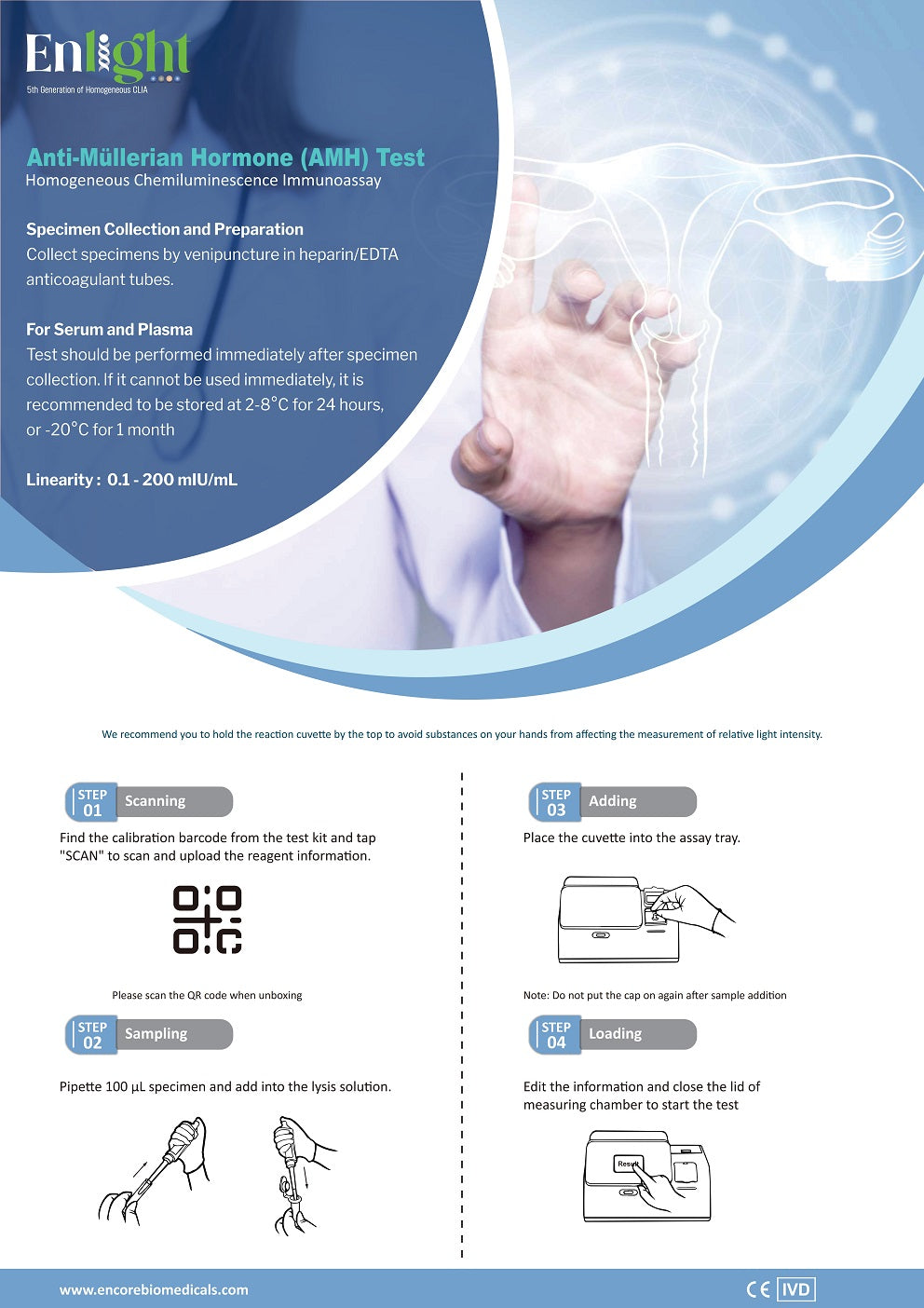
This assay is used for the in vitro quantitative detection of Anti-Müllerian Hormone (AMH) in human serum and plasma. AMH is a dimeric glycoprotein belonging to the TGF-β superfamily and is produced by granulosa cells in ovarian follicles. AMH levels reflect ovarian reserve—higher levels indicate greater fertility, while lower levels suggest declining ovarian function. It is clinically valuable for assessing fertility, especially in older women, diagnosing polycystic ovary syndrome (PCOS), and monitoring its treatment. AMH also serves as a marker for ovarian granulosa cell tumors and aids in evaluating developmental disorders such as precocious puberty and cryptorchidism. Additionally, AMH levels correlate with menopausal timing, making it useful for predicting menopause. Common testing methods include ELISA, chemiluminescence, and immunofluorescence.