


SICKLE CELL SOLUBILITY
SICKLE CELL SOLUBILITY
Batch Details
Batch Details
Lot No. : 025/10/2024/001
Mfg. : 10/2024
Exp. : 09/2026
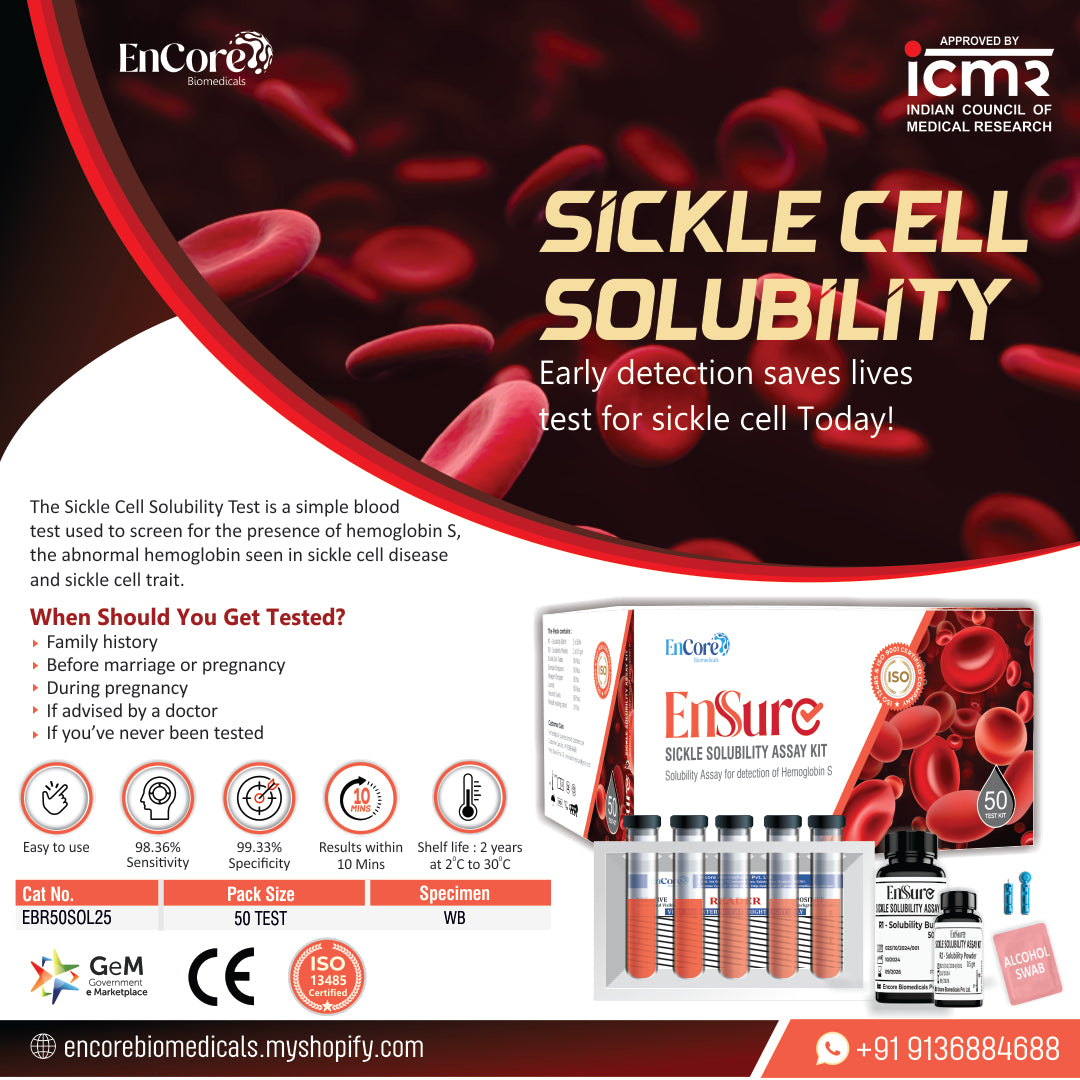
Hemoglobin S (Hb S) differs from normal Hemoglobin A (Hb A) by a single amino acid change—valine replaces glutamic acid at position 6 of the beta chain. This causes red blood cells to become sickle-shaped under low oxygen conditions, leading to blood vessel blockages and anemia. Individuals with sickle cell anemia (S/S) face severe symptoms and early mortality, while those with the trait (NS) are usually asymptomatic but may experience crises under low oxygen conditions. The Sickle Cell Solubility Test is based on the solubility difference between Hb S and Hb A in concentrated phosphate buffer solution. This reliable screening method enables healthcare providers to quickly identify the presence of hemoglobin S, facilitating early diagnosis and appropriate patient management. The test utilizes sodium dithionite in concentrated phosphate buffer to cause Hb S precipitation while keeping Hb A soluble, providing clear visual differentiation between normal and abnormal hemoglobin variants.
Check HERE Instructions For Use (Pack Insert)
Couldn't load pickup availability




Importance to know
-
Warnings and Precautions
- Please read the instruction carefully before performing the test.
- Do not use the test after the expiration date.
- Immediately carry out the test after removing the test device from the pouch.
- Do not mix or interchange the specimen sample.
- This test is intended for screening purposes only and should be confirmed with additional testing methods.
- Handle blood samples with care and follow universal precautions for bloodborne pathogens.
- Ensure proper centrifugation for accurate interpretation of results.
-
Limitation
- For in vitro diagnostic use only; detects hemoglobin S based on solubility differences in whole blood samples.
- This test should not be used as the sole criterion for the diagnosis of sickle cell disease or trait.
- If the test result is negative and clinical symptoms persist, additional follow-up testing using other clinical methods is recommended.
- A negative result does not preclude the possibility of other hemoglobin variants or blood disorders.
- Clinical correlation and additional diagnostic procedures such as hemoglobin electrophoresis are recommended for proper patient management and genetic counseling.
- Test may not differentiate between all hemoglobin variants; confirmatory testing may be required.